

Jamiat is the oldest and largest student organization in Pakistan.
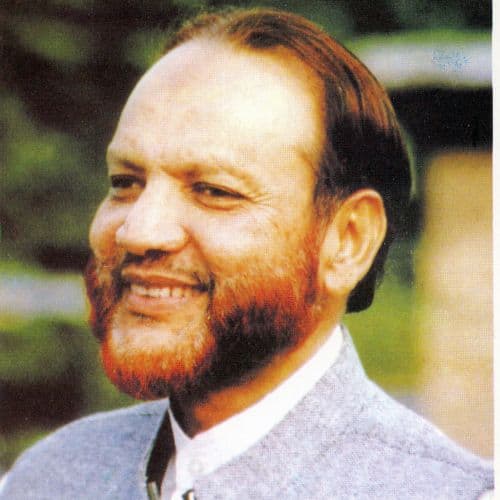
Engineer Khuram Murad
November 3, 1932
December 19, 1996
Engineer | Islamic Scholar | Former President IJT
Khurram Murad (1932–1996) was one of the foremost Islamic scholars of his time and held a distinguished place in the intellectual landscape of contemporary Islam. A deep thinker and prolific writer, he was among the key architects of the modern Islamic resurgence.Born in Bhopal, India, Khurram Murad graduated cum laude and went on to earn a Master’s degree in Civil Engineering from the University of Minnesota, USA. During 1975–1976, he was involved in the extension project of Masjid al-Haram in Makkah, contributing his professional expertise to one of Islam’s most significant sacred sites.
He was elected as the Central President of Islami Jamiat-e-Talaba Pakistan from October 1951 to October 1952, marking an early phase of his leadership in Islamic activism.
He later served as Naib Amir (Vice President) of Jamaat-e-Islami Pakistan, as well as a Trustee and former Director General of the Islamic Foundation, Leicester (UK). He also served as Editor of Tarjuman-ul-Qur’an, Lahore—an influential journal founded by Maulana Abul A‘la Maududi in 1932—and Editor of the Muslim World Book Review, Leicester, UK.
Khurram Murad authored more than thirty-five books in Urdu and English, influencing two generations of Muslims across the world. Among his most notable works are Inter-Personal Relations in an Islamic Movement (Urdu), Way to the Qur’an, Islamic Movement in the West: Reflections on Some Issues, Lam‘at-e-Zindan (Urdu), Shari‘ah: The Way to God, Shari‘ah: The Way to Justice, Key to al-Baqarah, Qur’anic Treasures, Gifts from Muhammad, and Who Is Muhammad (forthcoming).
As a translator and interpreter of Maulana Maududi’s writings, Khurram Murad made significant scholarly contributions. His major works in this area include Let Us Be Muslims, Islamic Movement: Dynamics of Values, Power and Change, and The Islamic Way of Life (co-authored with Khurshid Ahmad).
For over two decades, Khurram Murad was deeply engaged in Islamic da‘wah and interfaith dialogue in the West. He addressed dozens of international conferences and seminars and played a pioneering role in developing strategic thinking on da‘wah, both in Muslim-majority societies and in regions where Muslims live as minorities. His intellectual legacy continues to guide and inspire Islamic movements globally.


